MSO Banking & Treasury Management
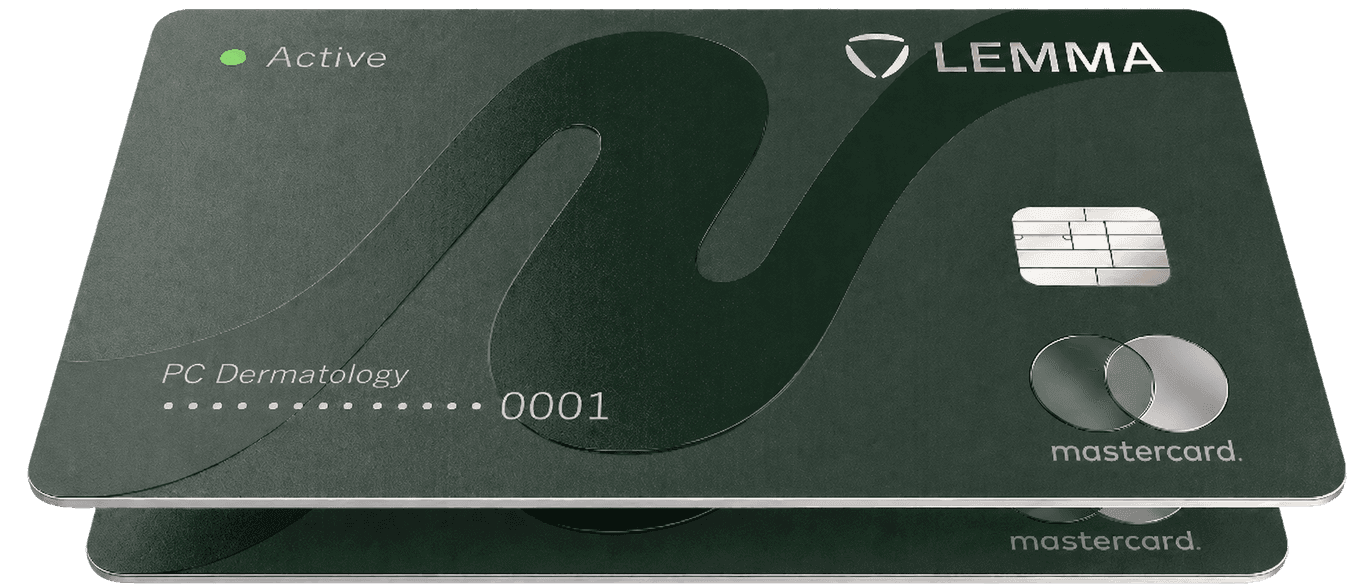
Lemma was built natively for MSO-PC and DSO-PC structures, with multi-entity account features that traditional banks simply don't offer.
Book a demoLemma was built natively for MSO-PC and DSO-PC structures, with multi-entity account features that traditional banks simply don't offer.
Book a demoAn MSO or DSO and its professional corporations are separate legal entities that share operations but cannot share cash freely, so multi-entity separation and rule-based cash sweeps do the work a single operating account cannot. For the full breakdown of the structure and what it demands of a bank, read our multi-entity banking guide.
Separate legal entities
Each practice is a separate corporation with separate tax IDs, compliance obligations, and FDIC insurance needs. A single account cannot protect all entities.
Consolidated reporting
You need to see cash flow across all entities simultaneously (total revenue, total expenses, consolidated balance sheet) while viewing each practice separately.
Intercompany transfers
MSOs and DSOs sweep cash between entities for working capital, loan payments, or distributions. Manual transfers require multiple ACH transactions and reconciliation nightmares.
Regulatory complexity
State healthcare laws, corporate practice of medicine restrictions, and payer agreements require separate accounting by entity. You can't run everything through one account.
FDIC insurance gaps
Standard FDIC coverage is $250K per depositor per bank. An MSO or DSO with $5M across 5 practices exceeds this limit. Lemma's sweep network extends coverage to $10M per entity.
Lemma solves all five.
Multi-entity group native banking architecture, not a workaround.
Multi-entity account structure
Each affiliated practice gets its own bank account number, ACH/wire routing, lockbox address, payment posting, and FDIC insurance, all under one Lemma parent account, with a consolidated dashboard your CFO can drill into in real time.
Separate payer relationships by practice
Some practices operate under different network agreements. Lemma routes payments to the correct entity's lockbox automatically: Medicare to Practice A, commercial to Practice B.
Corporate compliance documentation
Lemma generates entity-level reconciliation statements, proof of funds, corporate minutes, and intercompany transfer logs for healthcare regulatory compliance and state annual reports.
Sub-entity accounting
For MSOs and DSOs managing 3rd-party practices, Lemma allows management fees, service charges, and transfer pricing to flow between parent and subsidiary automatically.
The true cost of traditional banking compounds across entities. Here's what a 10-practice MSO or DSO is typically paying:
ACH fees
$6,300/year
10 practices × 150 payments/month × $0.35 = 1,500 transactions/month
Lost interest income
$34,800/year
$2M+ aggregate operating balance at 0.01% vs up to 1.75% APY
Total unnecessary cost
$41,100+/year
That could cover staff, equipment, or expansion capital
Multi-entity banking isn't a workaround at Lemma. It's the core architecture.
| Feature | Lemma | Traditional Bank | Standard Business |
|---|---|---|---|
| Multi-entity account structure | Native, purpose-built | Manual account management | Not supported |
| Consolidated dashboard | Yes, real-time | Requires third-party reporting | No |
| Automated intercompany transfers | Yes, rule-based | Manual ACH each time | Manual only |
| Entity-level reconciliation | Yes, automated | Manual by account | — |
| FDIC coverage for 5 entities | $10M+ via sweep network | Limited (unclear coverage) | $250K per account |
| Healthcare lockbox per entity | Yes, separate | Add-on service | Unavailable |
| Payment posting per entity | Yes, automated | Manual if available | Manual |
| Setup time | 5 minutes | 2–4 weeks | — |
| Cost | Free (included) | Varies by institution | $500–3K monthly |